Research
My research broadly focuses on the relationships between microbes, plants, and metals across terrestrial and aquatic environments. I utilize multi-omics tools to understand how microbes interact with the world.
1. Current Research in the Hug Lab
On top of being a potential source of harmful metals to groundwater, municipal solid waste landfills represent a previously untapped resource for critical minerals. My research in the Hug Lab investigates microbe-metal interactions across landfills of differing ages to better understand biogeochemical cycling. By defining relationships among microbes and between microbes and landfill leachate chemistry, we can better understand how to mitigate leaching of harmful metals, and - potentially - extract metals from leachate.
2. Impacts of mine tailings on plant and microbial communities
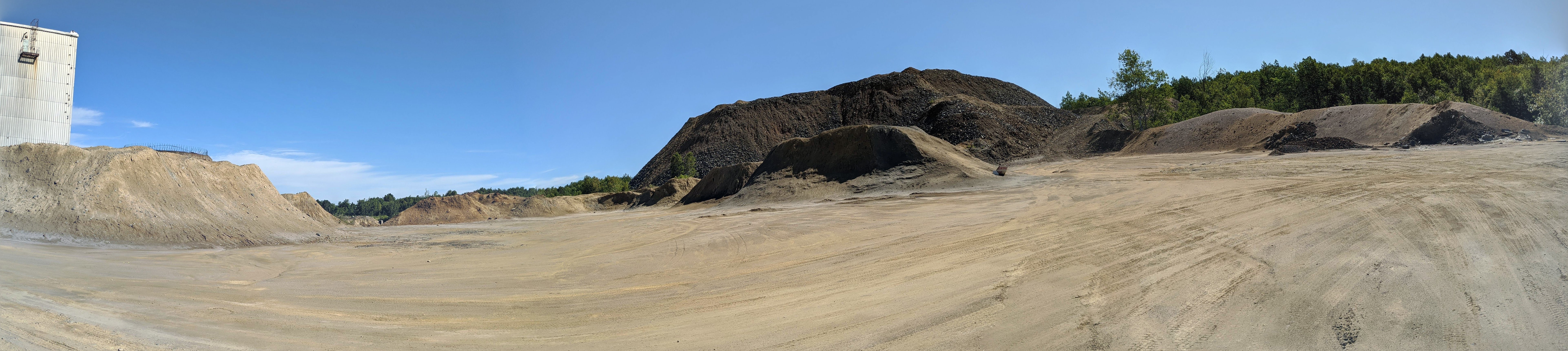
Mining wastes are found across the world, often bearing significant concentrations of potentially harmful metals. I have been involved in projects on:
1. Biogeochemical cycling in mine tailings impacted wetlands. I have worked on uranium and arsenic contaminated wetlands, investigating microbial communities and long-term consequences of metal contamination. I am also involved in a project investigating the impact of airborne metal dusts on wetland carbon cycling and microbial communities.
2. Plant and microbial ecology in mine tailings and mining-impacted soil. I have investigated tailings and soil geochemical factors influencing vegetation colonization in arsenic tailings and nickel-copper tailings, finding that plant communities established in microsites of relatively favourable geochemical and microbial conditions. Further, this research revealed that plants on mine tailings facilitate the biogeochemical changes that improve plant survival. In particular, plant presence on mine tailings is associated with increased proportions of microbes associated with cycling of organic matter.
3. Plant growth-promoting microbes increase plant survival on mine tailings. In my PhD, I investigated the impact of plant growth-promoting microbes on survival and biomass accumulation of an native acid and metal tolerant grass. Through growth experiments, I found that the application of plant growth-promoting bacteria and fungi increased plant survival, and, when used in conjunction with fertilizer and biochar, increased biomass significantly. Plant presence and plant survival also had major impacts on microbial communities in the experiment. These results showed that over a short-term study (1 year), plants and microbial communities worked together to improve tailings fertility.
3. Long-term impacts of restoration in the Sudbury region
I have been lucky to be involved in efforts to evaluate the success of the Sudbury Regreening Project, one of the largest regreening programs in the world. We found that understory plant succession patterns in amended sites mirrored those in naturally recovering sites (Paper in Botany). Next, we are investigating prokaryotic and fungal communities in the same sites.